Showing posts with label learning. Show all posts

Wednesday, October 1, 2014

Windfall.....

I was so lucky.  A friend called me and said that her husband didn't have time to make jam with their grapes this year, would I like them?
 
SURE!
 
I had no clue how to make jam, or jelly.  But, I thought, I am not going to refuse free fresh fruit!


I had never even had Concord grapes before.  Just Welsh's concord grape juice.  BOY! Is there a difference in taste.


 So, I brought home a whole cooler FULL of grapes.  Pounds and pounds of grapes.  That smelled heavenly, by the way. 
 
I went to my preserving books and they all said SUGAR!  Some were 5 cups of grapes, to 5 1/2 cups of sugar.
 
I don't know about where you live, but sugar here anymore is becoming expensive AND they've reduced the package size, but not the price.
 
Then, I went to allrecipes.com, one of my favorite places and found a recipe for Concord Grape pie.


Yes, I said pie.  Interesting.
 
So, I began to "pop" the flesh out of the skins.  What an interesting thing.  The skins just pop right off, very easily.  Too bad apples weren't so easy.  Or tomatoes for that matter.
 
Anyway, I popped the flesh into a measuring cup and the skins went into a bowl.  I needed to save those to add back in to the pie.


Then you put the flesh into a pan and you slow heat them and mash them a bit as you go to release the juice.  You bring them to an easy boil and the flesh just kind of melts and then the pits fall to the bottom.


Next, you strain everything.  I used my strainer and a potato masher to get as much of the juice and pulp as I could.
 
And, because I want to keep your interest, please wait for the next post to see the out come!

Monday, September 29, 2014

Will I be sorry?

Meet my comfrey plant.  I am not sure what kind it is.  I do not think it is a bocking 14, which they say is a sterile comfrey.


I only purchased the one because I felt that I could propagate it if it doesn't self seed this year.


It is a rather lovely plant, isn't it?  I bought it from a small, local nursery.  He had lots of people as for it last year, so he got some, but wasn't sure why they wanted it.  I told him that I was looking for a local source for it to use in my compost pile.  He said he was going to look into that.


Then, I asked at another nursery and when I did, the owner said, "why do you want a weed?  I have plenty of those by my compost pile, if you want some, I'll dig them up for you,"


I planted this one at the top of the yard near the new compost pile.  In that part of the yard, there really isn't much but weeds that grow there already.  What's another "weed"?  Only with this one, I will use the leaves in my compost pile and around my garden beds as mulch.


Comfrey has many uses in the garden.  I have clipped a few from WIKIpedia that explain why I wanted the plant in my garden and the uses for it.

Comfrey is a particularly valuable source of fertility to the organic gardener. It is very deep rooted and acts as a dynamic accumulator,[7] mining a host of nutrients from the soil. These are then made available through its fast-growing leaves (up to 4-5 pounds per plant per cut) which, lacking fibres, quickly break down to a thick black liquid. There is also no risk of nitrogen robbery when comfrey is dug into the soil as the C:N ratio of the leaves is lower than that of well-rotted compost. Comfrey is an excellent source of potassium, an essential plant nutrient needed for flower, seed and fruit production. Its leaves contain 2-3 times more potassium than farmyard manure, mined from deep in the subsoil, tapping into reserves that would not normally be available to plants.[8]
There are various ways in which comfrey can be used as a fertilizer. These include:[9] [10]
  • Comfrey as a compost activator - include comfrey in the compost heap to add nitrogen and help to heat the heap. Comfrey should not be added in quantity as it will quickly break down into a dark sludgy liquid that needs to be balanced with more fibrous, carbon-rich material.
  • Comfrey liquid fertilizer - can be produced by either rotting leaves down in rainwater for 4–5 weeks to produce a ready-to-use 'comfrey tea', or by stacking dry leaves under a weight in a container with a hole in the base. When the leaves decompose a thick black comfrey concentrate is collected. This must be diluted at 15:1 before use.
  • Comfrey as a mulch or side dressing - a two-inch layer of comfrey leaves placed around a crop will slowly break down and release plant nutrients; it is especially useful for crops that need extra potassium, such as fruit bearers but also reported to do well for potatoes. Comfrey can be slightly wilted before application optionally but either way, avoid using flowering stems as these can root.
  • Comfrey as a companion plant for trees and other perennials. Soil tests confirm[11] that soil nutrients increase in the presence of comfrey even when it is not used as mulch, side dressing, or liquid fertilizer, but just allowed to grow.
  • Comfrey potting mixture - originally devised to utilize peat, now environmental awareness has led to a leaf mold-based alternative being adopted instead; two year old, well decayed leaf mold should be used, this will absorb the nutrient-rich liquid released by the decaying comfrey. In a black plastic sack alternate 7–10 cm (3-4 inch) layers of leaf mold and chopped comfrey leaves. Add a little dolomitic limestone to slightly raise pH. Leave for between 2–5 months depending on the season, checking that it does not dry out or become too wet. The mixture is ready when the comfrey leaves have rotted and are no longer visible. Use as a general potting compost, although it is too strong for seedlings


I am not really sure how well this will do where I have planted it as the area is on top of a large boulder and only has a 2 inch layer of dirt on top.  I say dirt because it is an area that I have not gotten to yet, however, I did mange to put some newly made compost from the yard and the free compost I get from the county on to it and around it and it has since flowered and seems to be doing better.

I would love to know what your thoughts are, won't you leave a comment?  Thank you.

Monday, September 22, 2014

What is it?

I was recently at my dad's, where I have a garden as well. (I'll write more about that adventure in the coming months.)

DH and I decided to make a few raised beds there and we were working at putting in another one, so I had to do some weed removal before we could put the bed in.

So, I'm on my knees pulling away the weeds and all of a sudden a tuft of fur is revealed.  I couldn't really see anything, but all I could think was, "oh no, who have I disturbed?"


I didn't want to reveal too much, but I had to know, what was there.


It turned out to be a rabbit's nest with 7 babies in it!  What on earth are baby rabbits doing being born in mid September?!!  DH said, They're rabbits!  They're always having babies!"


I was afraid to move them, but DH insisted since they were in our way.  So, very carefully, with a shovel, I dug all around the nest and move them down about five feet from where they were.  That was when I was able to see that there were seven of them in this tiny nest and that their eyes were still closed.


I looked up on the internet and it said that if their eyes were closed that they were under 10 days old.  I stayed for four days and on that fourth day, one had it's eyes open just a tiny bit and they had grown to the size you see.


I was afraid that the mother would not come back, but by the second day after my moving the nest the mother had done a great job of hiding her little babies again and I knew that she was coming back to care for them.
 
My DH said we should have gotten rid of them, which I could never have done, because he felt they would eat the garden and leave nothing for us.  As far as I could tell, momma bunny had only eaten one of the cabbage plants that we had let go, so it really was not a garden loss in my book.
 
I'm glad she felt it was some place safe to have her family.  Please, remind me of that next spring and summer if my garden is eaten continually by rabbits!

Friday, September 19, 2014

Do you watch gardening youtube videos?

During my down time, I try not to watch too much television. Just like I try to read for knowledge, more than for pleasure anymore.  I like to spend my time learning as much as I can.
 
So, I found that there is a whole gardening world out there by way of youtube videos.

Do you watch any?

The first one I  found and tried to find every episode, was "Gardeners World".  The show airs on the BBC, from the UK, which we do get here, just selected shows though.  And the gardening there, climate wise, is somewhat similar to where I am, so thanks to all the gardeners, Monty Don, Alan Titchmarsh, Alyce Fowler, Carol Klein and so many more, I have learned more from these people than I think I could have without the shows.  Plus, seeing the gardens just makes you want to try it all.  They explain things to you as if you are in the room with them and they make the learning enjoyable and easy.

If you google the show, "Gardner's World" or any of the above names, you will find wonderful resources to spend hours of time learning about flower gardening, as well as vegetable gardening.

I would love to know if you watch any youtube videos to help you gaining gardening knowledge.

Friday, September 5, 2014

My lonely sweet meat

 
This is my lonely Sweet Meat Pumpkin.


Why is he lonely?  Well, out of the six seeds I planted, three came up, and then all three died.
 
So, I planted another set of six, and once again three came up.  I transplanted all three in a separate hill a piece, up by the hugel in lovely rich compost.
 
Two of the plants died.
 

The last plant has grown and flowered unbelievably.  There have been TONS of blossoms.  All but two of them were males.  I almost missed this one, it was near the end of the vine.  And, there was another one, even further along the vine, but a few days later I went back to look and that one was gone.  Or so I thought.  Upon closer inspection, it was a black ball about the size of a tennis ball.

I have never grown these before.  The reason I wanted to was because I heard they store well and taste good.

Here's to hoping.  I'll be sure to keep you posted on this one.

Sunday, August 24, 2014

We've moved the butterfly bushes

 
Well, it had to be done.
 
We moved the remaining three butterfly bushes.
 
I had heard that they could be invasive.  Wasn't exactly sure HOW invasive.
 
They are SEED invasive!
 
We have removed hundreds of small plants.  Many of them had grown very well where they fell and I know that I will now have seven years of pulling them out from where they fell last fall.  I can not let them to continue to grow where I had planted them as they were not in the appropriate place for being a seed invasive plant.
 
So, they were drastically cut back, dug up and replanted to the side yard and now it doesn't really matter how many seeds fall.  I just hope they will grow as well where we have planted them as the seeds grew where we didn't want them.
 
Another lesson learned.

Wednesday, August 20, 2014

The summer is coming to an end

Wow, I haven't been on here since spring. Can't believe how time goes by so quickly.

A lot has happened in the gardening department.

The gutter garden that DH built last fall has worked out splendidly.  I would recommend to anyone who has limited space to check into making one to grow salad greens.  I can not get over how much we harvested and replanted twice already this season.


I wish the pictures were a bit better, so you could really see how well the lettuces grew in the gutters.


In this next picture, you get just a small glimpse of how well the beans did growing up the netting on the other side of the gutter garden.  We are still harvesting beans from the original planting.  Sylvester has eaten most of the right off the vine/bush.  But I have managed to put away quite a few quart bags into the freezer.


Along the house, in the shade, you can see the tomato plants that I grew from the seeds our son gave us from the plant he was given last year from a friend who grows a heritage tomato, for which we have no name.  Pictures to follow of how and what the tomatoes look like.  They are super meaty.
 
Here is an early season picture of the hugel bed we made in the fall.  The five different kinds of blueberry bushes have been planted.  All the rest of the plants have been grown by me from seed.  The marigolds grew huge, too big really and I've cut them back a few times.  The picklers did wonderfully.  I am not entirely sure how many pint jars and spaghetti jars of refrigerator pickles I made and gave away.  Enjoyed by all.  I felt badly about having to pull out the plants just before vacation, but I knew too many would go to waste while we were gone.


These are just a few of the Daikon radishes I had planted from seed up in the hugel.  The leaves on them were a great addition to the compost pile and two friends really enjoyed the
 radishes.


I hope to post some more about my garden adventures in the coming weeks.
 
I hope that you will come back to visit and see how well I've done and what I've learned.
 
Leave a comment to let me know you were here.


Monday, March 10, 2014

How far do you want your food to travel?

Spring 2013
This is as far as I would like my food to travel.  As far as my own back yard.

Now I know that I won't be able to raise ALL of my food.  I'm not able to. I don't know I am going to try to make our yard as much of a garden, a food garden, as possible. We live on a small piece of land, that is on a definite slope.  So there are many challenges, but I've thought of some things to do to work around those challenges.

For me, my "food" will be what I can grow, basically vegetables and the beginnings of some fruits.

I've shared with you my journey so far with last years garden and how I am preparing for planting blueberry bushes this year so that in a year or two we will be able to harvest our own blueberries.

I don't want to say "I want to be able to grow 50% of my food" as I am not sure how much I can actually grow, but I do know, that I won't know if I don't try.  And so, I am going to try to grow more in my yard this year, than last.

I am also going to be growing things this year, that I am not sure that we are actually going to like and enjoy, but these are things we've never tried before.  Why?  Well, we are like most people, we tend to do what our mothers did.  So it's going to be about going outside of the "box" we've grown up in.  About going out of our comfort zone.  I look at it this way.  We may find some things that we really enjoy that we've been missing.  Maybe we've been missing them because our mothers never fixed them, OR they fixed them by cooking them to DEATH!

I wish I had decided all this 20 years ago so that I would have even more time to think about what we like and how to grow it.  If you are just beginning to garden, whether you are 10 or 50, try some new things as well as things you like.  Eat them raw, straight from the garden.  Try them steamed, blanched, roasted, or even boiled with no other seasonings.  Then, go from there.  Maybe you won't like them raw, or "plain", maybe they are good for stews or soups, or perhaps even breads or cakes.  Go outside of your "box" and comfort zone.

I'd love to hear any comments on what you are doing different in your garden this year.

Friday, March 7, 2014

Last Years Vegetable Garden

 
Last years vegetable garden was a true eye opener to me.
 
Carrots in October
 
 
I hadn't had a garden in many years, and I wasn't sure that with my ground and the slope, that I would be able to manage much of one.  But, with the help of my Dear Darling, and ALOT of work, we managed to have a nice yield for a first try.
 
 
Green tomatoes harvested before the first killer frost
 It makes me think about a lot of things, where growing your own food is concerned.  The past year has been not one for just my first garden in a while, but also of getting to be a "stay at home" wife.  To do that, I have had to simplify not only my "life" but our budget as well.  I had to learn to do new things and to stretch what I already know.

I learned how to use up the excess from our garden in ways I had never done before.  Such as the great tomato cake I made from all the green tomatoes that were there before the frost.

Brussel sprouts
 I learned that if I wanted to grow what we like, I had to try.  And the brussel sprouts grew just fine and we enjoyed a few harvests of them for our meals.  They were nice and fresh and they grew in our garden, they didn't travel a long distance to get here.

And more brussel sprouts
Tomatoes of several kinds that all grew well
 I love sauce, but tomatoes for me, are usually just a tomato or two on toast with Mayo and maybe some lettuce and I'm good for a year.  But, Dear Darling likes them on sandwiches, burgers and in his salads.  SO I grew a few different kinds, and we had them fresh, as well as dried and I even learned to can, on my own.  Something I am proud of and I look forward to doing next year.

Kale, never tried it before, shared it, loved it and will grow it again.
And, I learned to like Kale, as well as grow it.  I'm not really sure why I chose to grow it.  I guess it was because I had heard so much about it.  It is one of those things that takes a while to "like" it.  So at first, what I grew and harvested I gave to a friend.  She makes smoothies using Kale.  She is a cancer survivor and does what she can to eat healthy to stay healthy.  So I was so glad that I could give this to her and it would be used.  She was glad as well, as then she didn't have to buy and could use her budget towards another food item.

Then, I read about dehydrated Kale chips.  BINGO!  I was sold!  I made some, liked them and that was how the rest of the harvest was used.

Did it take a lot of time or effort to grow these things?  Well, last year, there was the time and expense of building the garden.  But as far as the actual time to grow them or the effort we put into growing them, no, there wasn't much done at all.

Now, all I can think of is this years garden and all the other "new" things I want to grow and try.  I am so excited by it all that I am having a hard time restraining myself from beginning to grow things from seed under my lights.

If you've never had a garden before, choose something you like, such as tomatoes or peppers, and grow a few in pots on your deck, patio or porch and enjoy knowing that you grew them, that they didn't travel far AND that you could.

Wednesday, March 5, 2014

The big spring project

We have a problem with our yard.  It's on a slope and in the past few years we've had at least one really HEAVY down pour of rain a year and so the water from our neighbors yards, who are above us, needs to go somewhere and we've found that it goes from one neighbors yard, who is the highest, into his neighbors yard, which is next door to him, but a bit lower and runs down our yard hits our house and pours down our stairs like a water fall.

Not good.
Water runs through this fence

Down past this planter

Down past the second planter
All the way down past the third planter


Wash out second year


Wash out the second year


Wash out second year
Wash our second year
Yes, this is how steep our yard is.  It has a lot of challenges. And since we are going to be here for a few more years, I would like to get more gardening use out of our yard.

I've been doing some reading and this year we are going to try to dig a trench at the top of the yard near the fence and put in a dry gravel bed that will run parallel with the back fence, under the fence that separates our yard and divert the water to run out the side yard without hitting the house or running down the side stairs.

Our yard, in areas where we have dug already, is mostly shale gravel with not much dirt.  Yes, dirt, not soil.  We don't know exactly how deep we will be able to dig this trench for the gravel bed, we would like to try for 12 inches, but I am not sure we will manage to get that deep.

We will also try to shape a swale, so that there is a slight berm at the bottom, or north side of the gravel bed, to help reduce the force of any downpour that may not run down the gravel bed.  I think the swale will help to disperse the water from pouring down with such force and at the same time also help to retain water in our yard and slowly disperse it over time.  On the other side of the swale I am hoping to make more garden space in the fall.

Updates to come, once spring is here.


Monday, February 10, 2014

Organic Gardening - The book (s)

 
Since beginning my gardening experience last year, I have purchased a few books and have read ALOT of books that I borrowed from the local public library.
 
My father got me a subscription to "Organic Gardening" magazine, which I thoroughly enjoy and recommend to any new gardener. (no, I have no affiliation with them.)
 
As I have mentioned before, books are a downfall for me, and if I am not careful, they become a problem, so I now try to choose very wisely when I buy them.
 
I bought this book and enjoyed it greatly.  I read it from cover to cover, over the course of several weeks and learned a great many things, and relearned some things that I had forgotten.


This is an old one, written by Samuel Ogden in 1971.  I would imagine that it is out of print now, so you could check your library system to see if they have it or can get it.  Even though it was written in 1971, it is a really good book and a lot of the information in it is still applicable today. This one was actually on the shelves at my local library.


As I read each book, I have been trying to record in my "garden journal" anything that I find interesting and helpful, so that I can refer back to it in the future.

Friday, January 24, 2014

When life gives you lemons

Or rotten apples.

Recently, Dear Darling, picked up one of those 3 or 5 pound bags of apples at the grocery store.  I hate those.

I worked in a grocery store, I know how "the kids" handle those bags.  They get tossed and thrown and dropped like crazy.  What do kids care?  When no adult is watching them, they don't.  They want to have fun and they don't care if the apples get bruised and then rot before selling.

So, when we got home, I felt the apples in the bag and about half were soft or rotten.  Before, I would just throw them out.  That would have been more than 30% food waste going to the landfill.  Instead, I let them sit on the counter while we put away the rest of the shopping order.

The apples still "looked" nice. It was as if they were just asking to not be thrown away.

I could put them into the compost pile, or feed them to the worms, were my initial thoughts.  But then, I remembered that my mother used to make a snack type cake with apples and a box of cake mix, and I knew I had a box of yellow cake mix in the pantry. 

My mother is not around to ask for this recipe, so I went to allrecipes . com and put apples into the search and got the following recipe.

Apple Snack Squares

I followed the recipe, but I did use all the apples, which were Macoun, and on the smaller side, so I ended up with about 2 to 2 1/2 cups of chopped apples.

It came out WONDERFUL! and we both loved it.

Dear Darling mentioned that this was something that his grandmother would have done, she never wasted anything.  For me, that was a great compliment.

Next time that life gives you lemons, or rotten apples, take the time to look at them from a different angle and see what you can do with them.

Wednesday, January 22, 2014

Light Bulbs!

Compact Fluorescent Light bulbs

Have you thought about them at all?

When we moved to the mid west in the mid '90s we bought several when we moved in.  They were about $13.00 a light bulb and we had them on in our living room, which was in the lower level of the house, 24 hours a day, 7 days a week for 7 years until they burnt out.  I can not tell you what kind they were, or where they were made, but they were well worth the $13.00 a light bulb.

We try to use them now, but aren't always successful in finding a size and shape to fit the use of the light.  They are less expensive now, about $4 to $7, and they don't last 7 years.  Maybe 3.

I've been talking with Dear Darling about finding some that will fit into the kitchen light,(which has 5 bulbs) the dining room light (which has 5 bulbs) and into our hanging bathroom lights (which is two bulbs).  He said it was difficult to find dimmer bulbs in CFL.  We have dimmers on the switches in the kitchen and the dining room.

I explained to him that not only did I want to change this lighting because of the savings to our electric bill, but also to help conserve electricity as a whole.

While at Lowe's this past weekend, we took a few moments to look at the light bulbs to see what was "new" in lighting.  We found two different kinds of bulbs, which we purchased to give a try in our kitchen and our bathroom.

For the kitchen, we purchased two Utilitech Pro LED bulbs. I did not realize that reading a light bulb package is kind of like reading a food package.  They now have "THE FACTS" about the product. They have a brightness of 300 lumen's, a usage of 4.8 watts, and are equivalent of a 40 watt light bulb.  It says it is a warm light and it is dimmable.  The cost per bulb is $14.98, and the package says its estimated energy usage is $.58 per year, using the bulb for 3 hrs per day, and has an estimated life of 27.4 years. (I find this one hard to believe, but we'll see).  They do not contain any bad metals in them, such as mercury, and can be recycled or disposed of without threatening the environment.

The bulb is made in China, which is NOT a plus for me, but we could find no bulbs made in the USA.  In the FINE print, it does offer a warranty of three years or it will be replaced.  So I have saved the packaging and the receipt and believe me, if this bulb dies before then, I'll be going to get another!

We purchased two bulbs for the hanging lights in the bathroom as well.  These are Utilitech  CFL bulbs,  The lighting facts are per bulb, they are bright white, 900 lumen's, Estimated yearly energy cost $1.57, lifetime is 9.1 years and it uses 13 watts to provide the equivalent of a 60 watt bulb.  It is also made in China and it has a two year warranty.  The price was $6.28 for the two pack.  These do contain MERCURY and when they are done you need to dispose of them properly and not just throw them in the trash. (Something I never knew before)

So far, we like the two added bulbs in the kitchen fixture and we will replace the rest of those bulbs, plus those in the dining room fixture a little at a time.  Not that $14.98 is that much money, but 8 more bulbs at once is.  We are also happy so far with the bulbs in the bathroom fixture.  They don't seem quite as bright as the others right away, but after a few minutes, they are quite bright.

I will be sure to keep you up to date on our findings with these bulbs.

Have you considered converting?

Monday, January 20, 2014

Being prepared Part 2


This is another short note about being prepared, all the time, not just in winter.

In recent years it seems as if there have been more storms to make the news.  I don't know if you've lived through any of them, but here at our house, we've had a few.

Now there are tons of sites on the internet and lots of books to be borrowed from the library on preparing for any disaster you can think of.  I encourage you to look at some and to think over what you feel is the right level of preparedness for you.

Here are some of the things we do in our house.

We have several rechargeable flashlights.  They are always in the charging dock and fully charged.  Yes, this uses a small amount of power, but when your lights go out in the black of night can you find your flash light?  I know where each one is and I feel so much better knowing it has a full charge.  We also keep several battery operated flashlights available as well as a stock of batteries at the ready.  To light up a whole room and to not have to hold your flashlight while doing it, get a sturdy, tall drinking glass and up end the flashlight into it so that it shines towards the ceiling.  It's as good as having an overhead light on.

Candles and matches.  During Hurricane Sandy you could not find ANY matches on the shelves in stores.  We keep several boxes of stick matches handy for just this reason.  If you can't light your candle, they are no good to you.  Plus, you may need matches to light a fire in your wood burner, or two light your gas stove.  I am of the age where gas stoves did not have the electronic ignition, you used a match to light them.  A lot of younger people don't know that you can still use your gas stove during a power outage, that they can light it themselves, but you need matches to be able to do it.

A princess phone.  What?  Yes, I said a princess phone.  When the power goes out in your home, so does the ability to use your cordless phones.  Ask me how I know?  We always keep an old princess phone underneath our phone table for just this case.  It comes in handy.  Now that everyone carries a cell phone, you may think that you don't need one, but suppose the cell towers are out as well?  At least you have another option.

Another thing I do is to keep a copy of my power bill near the phone.  When the power goes out, there's no fumbling looking for the previous months bill or the phone book to call and report an outage, it's right there.

The last thing I'll share with you is this and I know this may sound silly, but I fill the bath tub with water.  Why?  So that there is water to flush the toilet.  And to wash up if I want to.

Friday, January 17, 2014

Being prepared


This is just a short note about being prepared.  We all hear about it, but how many actually DO it.

Every winter we get together two winter car kits.  They are basically just smaller Rubbermaid tubs and inside them we put a few tea light candles, some matches in a plastic bag or metal tin, a pair of gloves or mittens, a hat, some hard candies, a large black or dark green garbage bag or two, and a granola bar.  For me, I also put some car "knitting" and a book.

Also in the car goes a wool blanket, a small snow shovel and some sand or sand and salt mix.  You could use kitty litter if you have that handy instead. You could also put a bottle of water or two in there, but remember, it is winter and it will probably freeze.  If you hope to heat it up, you will need a little tin cup or a pot and some way to get it out of the bottle if it's a plastic container. Place any other items that you feel you will need in there as well.  Some people put a sterno can or two, some will put those little hand warmer packs that once you open the package they heat up.  Think about what you feel you would need to keep you happy, sane, and patient. Please also keep in mind that you will need to have a window cracked while using a sterno can in the car.

Just these few items placed in the trunk or back seat of your car can save you a lot of aggravation and worry if you should be on a road trip and your car breaks down, you run out of gas or the weather prevents you from going any further.

A few years ago there was a very bad snow storm that came through that had a few hours of sleet on top of the ice and one of the major highways closed down with hundreds of cars and trucks stuck on the highway as they couldn't get up the mountain.  Some of those people were on the road, in their car for a day or two.  I am sure none of them expected that to happen, but it did.  I also expect many of them had no safety or comfort items with them.  Yes, the National Guard had been called in and brought items to all these people stranded in their cars, but I am sure that the waiting must have been agony for the occupants.

I hope todays post will help you think about what you will put into your winter car kit and make one up for each car in your home.

Wednesday, January 8, 2014

One Hundred Mile Diet

What?

Locavore: (According to Wikipedia)

A locavore is a person interested in eating food that is locally produced, not moved long distances to market. The desired maximum distance for local produce is between 50-100 miles. The locavore movement in the United States and elsewhere was spawned as interest in sustainability and eco-consciousness became more prevalent.

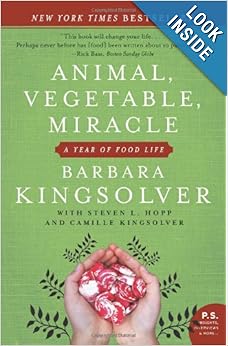
I read about being a locavore for the first time in Barbara Kingsolvers book, Animal, Vegetable, Miracle, last year.  I never gave a lot of thought to where my food came from, just that when I wanted to eat something, I would go to the grocery store and buy it.  I didn't really think about the miles it traveled, or where it actually came from, I was just glad that I could go to the grocery store in the cold of January and buy a fresh orange.

Now, when I go into the store and buy a "fresh" orange, I wonder..... how "fresh" is it?  where did it come from? and, how many miles away is that?

We decided to start our garden so that we knew "where" our food came from and also to save some money.
 
 
We also decided, that for 2014, we would join our local CSA to give that a try.  We joined it together with another family because my friend had been talking about joining and was afraid she wouldn't be able to use everything she got in a box, as she has two small children and wasn't sure she would have the time to take care of all the food.
 
The arrangement will work well for both our families, as no matter what we get and share, we are both concerned about where our food comes from.


I also like that we will be supporting a local farmer.

While I am not one to make new years resolutions, I would like to think that by thinking more about where my food comes from and eating in season, I am making a healthy lifestyle change that is good for me, and good for the environment as well as supporting a local, small business.

Have you looked lately to see "where" your food is coming from?

Monday, January 6, 2014

The book that got me thinking


I picked up this book last year, 2013, when I had a need to "hold" a book and read.  I had heard about the book from somewhere, or someone, and I can't remember where or who now, but I'm glad I went searching for the book.

I won't spoil it for you, you can go over to amazon or to your local book store and take a peak at it there.

I will say that once you've read it, you begin to think about where your food comes from.  Truly.  I know that farmers grow my food, but it made me more aware of "where" my food comes from and I began to look when I was shopping for my groceries.

I was surprised and appalled to see that a lot of the canned items I was using were from other countries.  Why are mushrooms coming from CHINA when Pennsylvania has one of the largest mushroom growers in our country?

Why were the oranges in our orange juice coming from Brazil and other countries?  I have since found a brand that juices from oranges here in the United States.

I can understand in the dead of winter there are fruits and vegetables that are not grown local and have to travel farther, but really?  Why from another country?

Not just canned and fresh either, frozen as well.  I probably shouldn't mention names, but Green Giant, check their labels.

When we lived in the Midwest, the potatoes and the green beans, in season, by the truck load, would roll to the Green Giant plants.  Tractor trailer loads!  What a sight to see.  But now, look at their labels.

The book was the primary reason why I decided we had to figure out a way to grow more of our own food. 

Our yard presents us with great challenges, and Dear Darling was so wonderful to build my main garden for me.  It was a tremendous amount of work and expense, but it did very well for it's first year, I'm happy to say.  While I did not keep any true records of how much was grown, we did have something from it nearly every week once it was producing, and it's the first time I ever canned my own tomatoes and dried them.

This book helped me to begin our journey to a simpler life and growing where I am planted.

What book got you started on your simple life or your gardening journey?

Friday, December 20, 2013

This weeks experiment

Every week I try to pick something to improve upon to either save money, the environment or to use our resources to the best of our ability.

This week, at least Monday through Friday evening, I have decided to make it a no TV week.  I have not turned on the bedroom TV in the evenings in over a month in an effort to save electricity.

It's winter here, and there is snow on the ground, and it gets dark at 4:30 in the evening.  So believe me, this isn't easy.  Usually I have the TV on as background noise or something "to do" when the nights are long.

There are a few reasons for my wanting to try this, first I want to see if I can.  Secondly, I want to see how much this will change our electric bill.  And finally, I really need to get some of my holiday knitting completed for gifts that I am planning to give.

I have gone without TV before.  When we were kids, we had a house at the shore and we had no TV and no telephone.  Growing up back in the 60's and 70's, you didn't really need a TV to keep you busy or for company.  You went outside and found your own adventures, you played board games on rainy days, or you read books that took you to far away places.

I have managed to get through quite a bit of a sock, that will be for my husband, and I have finished reading two of the garden books that I took out of the library.
These are a pair of socks I did for myself last year.

Monday, December 16, 2013

My trip to the library

I haven't been in our town library in quite a few years.  The internet usually provides me with plenty of information.

But, as I've mentioned before, I am a book person, and I don't want to buy all the books that I want to read, so I have to start to use my library again.

Anyway, we have a very small library, but, there were a number of books on gardening that I would like to read, so this time I checked out 4 books.  I plan to share all of them with you over time, and some of the thoughts that I got out of them.

I also wanted to begin using my library again to support them and to save my family some money.  Plus, I'm hoping that perhaps, they may have information on any garden groups or things going on in my county to help with simplifying our lives.

I would like to encourage you to pay a visit to your local library today.


Saturday, December 7, 2013

Blogging

I would love some help learning how to make my blog more appealing.

Do you have any thoughts or sites to share that would help me out with this?

I am a visual learner, so lots of pictures or videos are best.

Thanks for the help.

Enjoy the day!